 Postry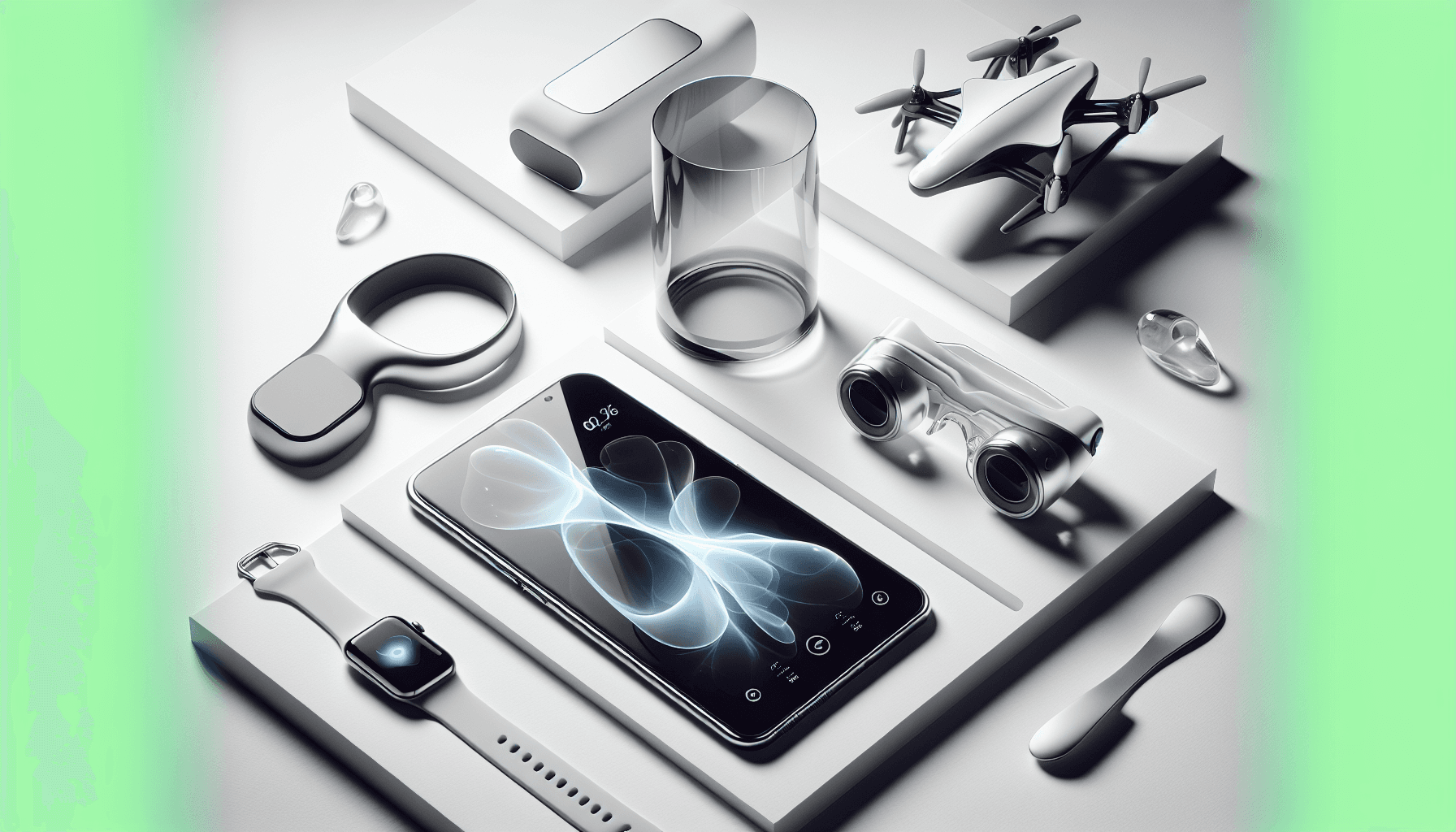
The future arrived sooner than we imagined
If someone had shown us the gadgets available in 2026 just a decade ago, we would probably have thought they were scenes from a science fiction movie. The speed at which technology has advanced in recent years has transformed concepts once confined to imagination into real, accessible products that are increasingly present in our daily lives.
In this article, we will explore the most impressive devices of 2026 that challenge what we considered possible and are redefining how we live, work, and have fun.
Transparent and foldable smartphones
Foldable smartphones had been around for a few years, but in 2026 we reached a new level. Manufacturers like Samsung and Xiaomi have launched devices with transparent screens that can be folded into three parts, turning a compact phone into a ten-inch tablet in seconds.
Transparent OLED technology allows you to see through the device when it is in standby mode, creating a futuristic visual effect that seemed impossible just a few years ago. Additionally, the durability of these screens has improved dramatically, supporting over 500,000 folds without quality loss.
Augmented reality glasses for everyday use
Forget the bulky virtual reality headsets. In 2026, augmented reality glasses that look like regular eyeglasses are finally on the market. Meta, Apple, and Xreal lead this category with devices that project holographic information directly into your field of vision.
With these glasses, you can:
- Translate conversations in real time, with subtitles floating next to the speaker
- Navigate cities with directional arrows overlaid on real streets
- Attend work meetings with 3D avatars of colleagues projected into your room
- Access cooking recipes with step-by-step instructions projected onto your kitchen counter
Most impressively, these devices weigh less than 45 grams and have battery life for a full day of moderate use.
Neural wristbands that read your thoughts
Brain-computer interfaces have left the labs and arrived at your wrist. Companies like Neuralink and CTRL-labs have developed wristbands that capture electrical signals from arm nerves, allowing you to control devices literally with your thoughts.
In practice, this means typing messages without touching any screen, controlling drones with subtle finger gestures, and even playing video games with precision that no conventional controller can offer. The technology is still evolving, but the results are already surprising and point to a future where keyboards and mice may become obsolete.
Personal drones with autonomous intelligence
Drones in 2026 are no longer just expensive toys or professional tools. Models like the DJI Aura and the Skydio X10 function as flying personal assistants, capable of following you automatically, avoiding obstacles in real time, and even carrying small packages.
These drones use embedded artificial intelligence chips that process images and sensor data in milliseconds without relying on cloud connectivity. This enables autonomous flights in complex environments like forests, dense urban areas, and even inside buildings.
3D printers that make real food
3D food printing has gone from being a tech fair curiosity to a household reality. Printers like the Foodini Pro and BeeHex Chef allow you to create elaborate dishes using fresh ingredients in special cartridges.
The equipment can print everything from complex-shaped pasta to artistic chocolates and even plant-based proteins with textures that mimic meat. Fine dining restaurants already use this technology to create presentations impossible to replicate manually, while families use home models to prepare personalized meals with precise control of nutrients and calories.
Long-range wireless chargers
Finally, the promise of truly wireless charging has become reality. Devices like Wi-Charge and Ossia Cota can transmit energy via infrared or radio frequency to your gadgets at distances of up to five meters.
This means you just need to enter a room equipped with a transmitter for your smartphone, earbuds, smartwatch, and other devices to start charging automatically. Hotels, airports, and cafes are already installing these systems, creating invisible charging zones that eliminate the need for cables and outlets.
Portable holographic displays
Holographic screens are no longer exclusive to movies like Star Wars. In 2026, portable holographic projectors the size of a hockey puck can create floating three-dimensional images with impressive resolution.
These devices use a combination of lasers and light fields to create images visible to the naked eye, without the need for special glasses. Architecture and engineering professionals use the technology to visualize 3D projects, while gamers experience a new dimension of immersion in their favorite games.
What to expect in the coming years
The gadgets of 2026 are just the beginning of a technological revolution that promises to accelerate even further. With advances in quantum computing, generative artificial intelligence, and nanotechnological materials, the coming years should bring innovations that will make current devices seem primitive.
The most fascinating thing is that many of these technologies are already accessible to the average consumer, democratizing access to innovation in a way never seen before. If today's gadgets look like science fiction, it is exciting to imagine what the next five years have in store for us.
One thing is certain: the future is no longer a distant promise. It is already in our hands, in our eyes, and literally in our thoughts.