 Postry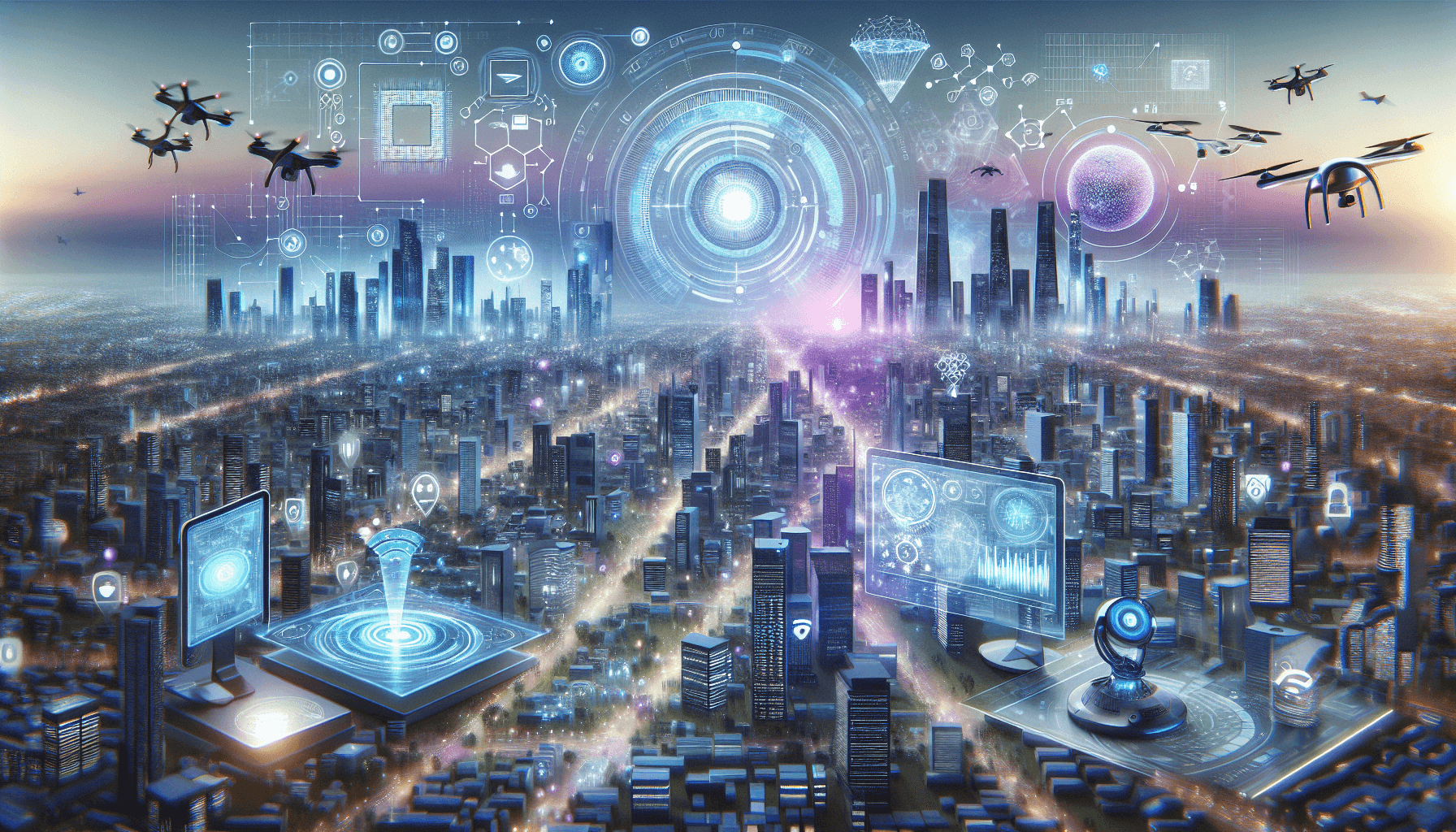
The Future Is Here: Technologies That Will Redefine 2026
The year 2026 promises to be a watershed moment in the world of technology. With accelerated advances in artificial intelligence, quantum computing, and connectivity, we are witnessing transformations that just a few years ago seemed like science fiction. In this article, we will explore the main technology trends shaping the present and that promise to dominate the global landscape in the coming months.
Generative Artificial Intelligence in Everyday Life
Generative artificial intelligence has moved beyond novelty to become an essential part of daily life for businesses and individuals. In 2026, AI assistants are integrated into virtually every work tool, from text editors to software development platforms. What has changed is the sophistication: current models can understand context with much greater depth, generate complex code, create multimedia content, and even assist in medical diagnoses with impressive accuracy.
Companies that have not yet adopted generative AI solutions are falling behind. According to recent reports, more than 80% of medium and large organizations already use some form of AI in their internal processes, whether for automating repetitive tasks, data analysis, or customer service.
Quantum Computing Leaves the Laboratory
Quantum computing is finally taking concrete steps to move from the academic environment into the commercial market. Major technology companies have announced quantum processors with more efficient error correction, making it possible to solve problems that classical computers would take centuries to process.
The most promising applications include:
- Discovery of new drugs and materials through molecular simulations
- Real-time optimization of global supply chains
- Post-quantum cryptography to protect sensitive data
- Climate modeling with unprecedented precision
Although quantum computing is not yet accessible to end consumers, cloud computing platforms already offer access to quantum processors as a service, democratizing the use of this technology for researchers and startups.
The Rise of Autonomous AI Agents
One of the most transformative trends of 2026 is the rise of autonomous artificial intelligence agents. Unlike traditional chatbots, these agents are capable of planning, executing, and monitoring complex tasks independently, interacting with multiple systems and making decisions based on user-defined objectives.
In practice, this means an AI agent can receive instructions to organize a complete trip and autonomously research flights, book hotels, create itineraries, and even adjust plans in real-time if something unexpected occurs. In the corporate environment, autonomous agents are being used to manage projects, monitor IT infrastructure, and even conduct recruitment processes.
Extended Reality and Spatial Computing
Extended reality, which encompasses augmented, virtual, and mixed reality, is gaining significant traction in 2026. With lighter, more affordable devices and better image quality, consumer adoption is growing consistently.
The concept of spatial computing is redefining how we interact with digital information. Instead of flat screens, three-dimensional interfaces allow us to manipulate data, collaborate with remote colleagues, and consume content in completely new ways. Sectors such as education, healthcare, and engineering are among those that benefit most from this evolution.
Sustainability and Green Technology
The push for sustainable solutions is driving a new wave of technological innovation. In 2026, we see significant advances in:
- Solid-state batteries with greater capacity and lifespan
- Data centers powered entirely by renewable energy
- Chips and processors with drastically improved energy efficiency
- Environmental monitoring platforms based on IoT and satellites
- Biodegradable materials for electronic components
Major technology companies are increasingly being held accountable for their environmental impacts, especially with the exponential increase in energy consumption of data centers powering AI models. The pursuit of energy efficiency has moved from optional to a competitive differentiator.
Cybersecurity in a New Era
With the advancement of AI and quantum computing, cybersecurity faces unprecedented challenges. Cyberattacks are more sophisticated, using AI to create phishing scams nearly indistinguishable from legitimate communications and to exploit vulnerabilities in an automated fashion.
In response, the digital security industry is adopting innovative approaches such as zero-trust architecture, advanced biometric authentication, and AI-based defense systems that can detect and neutralize threats in milliseconds. Post-quantum cryptography is also being implemented by governments and large corporations in preparation for the moment when quantum computers can break current encryption algorithms.
Internet of Things and Smart Cities
The Internet of Things continues its expansion in 2026, with billions of connected devices around the world. The differentiator now is integration: sensors, cameras, and actuators work in a coordinated manner to create truly intelligent environments.
Cities around the world are implementing smart infrastructures that optimize traffic, reduce energy consumption, improve public safety, and offer more efficient services to citizens. Major cities worldwide are investing in smart city projects that promise to transform the urban experience.
What to Expect for the Rest of 2026
The technology trends of 2026 point to an increasingly connected, intelligent, and automated future. The convergence of AI, quantum computing, extended reality, and IoT is creating a technological ecosystem where the boundaries between the physical and digital worlds are increasingly blurred.
For technology professionals, staying updated on these trends is not just a matter of curiosity but of market survival. The most valued skills include mastery of AI tools, understanding of distributed system architectures, and the ability to quickly adapt to new technologies.
The future of technology is being written now, and 2026 is the year when many of these trends move from promises to concrete reality in our daily lives.