 Postry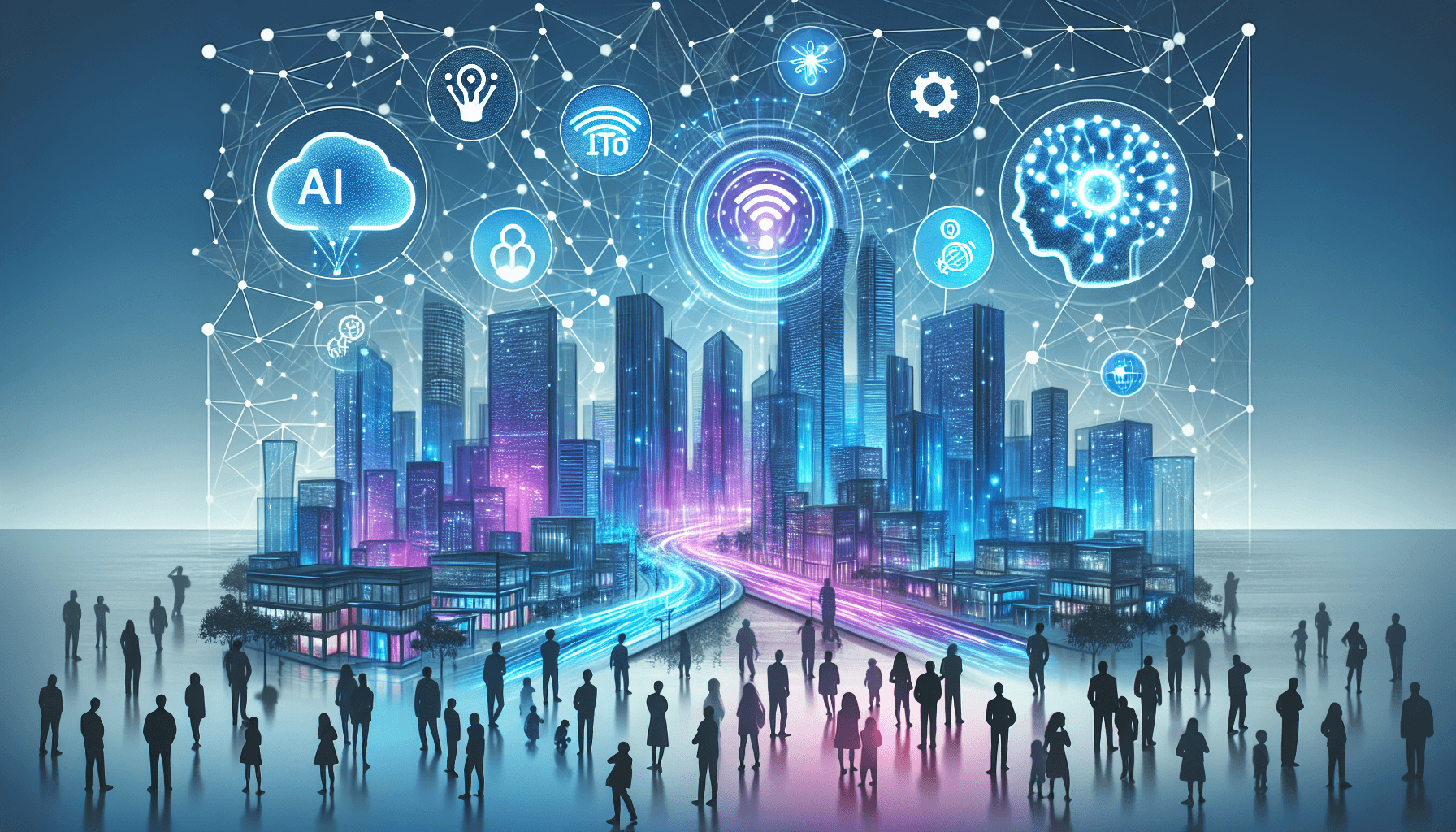
The internet is about to take another giant leap
You have already heard about Web 1.0, Web 2.0, and Web 3.0. Each of these phases brought profound transformations in how we connect, consume information, and do business. Now, we are on the threshold of a new revolution: Web 4.0, also called the Symbiotic Web or Intelligent Web. But what does this really mean for your daily life?
Web 4.0 represents the convergence of advanced artificial intelligence, Internet of Things (IoT), quantum computing, and immersive interfaces. Unlike previous versions, this new phase of the internet does not just respond to your searches — it anticipates your needs, learns from your habits, and acts proactively to streamline your routine.
A brief evolution: from Web 1.0 to now
To understand the magnitude of Web 4.0, it is worth quickly revisiting the path we have traveled:
- Web 1.0 (1990–2004): the static internet. Websites were read-only pages with no interaction. You consumed content but did not participate.
- Web 2.0 (2004–2015): the era of social media and collaboration. Blogs, YouTube, Facebook, and Wikipedia turned everyone into content creators.
- Web 3.0 (2015–2025): the semantic and decentralized web. Blockchain, cryptocurrencies, and structured data allowed machines to understand the context of information.
- Web 4.0 (2025 onward): the symbiotic internet. Intelligent systems integrated into the physical environment, capable of interacting with humans naturally and contextually.
The pillars of Web 4.0
Web 4.0 is built on four foundational technologies that, when combined, create an entirely new digital experience:
1. Generative and contextual artificial intelligence
AI is no longer just an assistant that answers questions. In Web 4.0, it becomes an autonomous agent that understands context, emotions, and intentions. Imagine a system that, upon sensing you are stressed by your day's schedule, automatically reorganizes your meetings, suggests a break, and adjusts the lighting in your office.
Advanced language models can already hold natural conversations, generate code, create visual content, and even make complex decisions. In Web 4.0, these models will be integrated into every device and service you use.
2. Internet of Things (IoT) at full scale
Smart sensors will be in practically everything: clothing, appliances, vehicles, urban infrastructure, and even on your body through advanced wearables. These devices collect data in real time and feed AI systems, creating a continuous improvement cycle.
In practice, your refrigerator will know when milk is running low and place an order automatically. Your car will communicate with traffic lights to optimize your route. Your doctor's office will receive your health data before you even arrive for your appointment.
3. Immersive interfaces and spatial computing
Augmented reality glasses, interactive holograms, and neural interfaces are replacing traditional screens. Web 4.0 will not be accessed only through smartphones and computers — it will be projected into the world around you.
Work meetings will take place in virtual rooms with realistic avatars. Online shopping will let you try products in 3D within your own environment. Classes will feature interactive simulations that make learning visceral and memorable.
4. Quantum computing and decentralized processing
The processing power required for Web 4.0 demands advances in computing. Quantum processors, combined with edge computing and decentralized networks, ensure that data is processed at ultra-high speed and securely, without relying on centralized servers.
How Web 4.0 will change your daily life
The theory is fascinating, but what matters is how these technologies will impact your routine. Here are real scenarios that are already becoming possible:
Personalized and preventive healthcare
Wearable devices continuously monitor your vital signs. AI analyzes patterns and identifies risks before symptoms appear. Your doctor receives automatic alerts if something is off, and personalized treatments are suggested based on your genetic profile and lifestyle.
This means fewer emergencies, more accurate diagnoses, and medicine that treats the cause, not just the symptoms.
Adaptive education
AI-powered learning platforms adjust content in real time to your level of understanding. If you learn best with visual examples, the system generates 3D simulations. If you prefer reading, it adapts the material automatically. The learning pace is yours, and the content is always relevant.
Intelligent work
AI assistants manage your schedule, prepare meeting summaries, draft reports, and automate repetitive tasks. Augmented reality collaboration tools allow distributed teams to work as if they were in the same room. Human focus shifts to creativity, strategy, and relationships.
Smart cities
Traffic lights that adapt to real-time traffic flow. Energy systems that distribute electricity optimally. Waste collection that only happens when needed. Public services that anticipate demands and reduce waste. Web 4.0 transforms urban infrastructure into a living, efficient organism.
The challenges we need to face
Every technological revolution brings risks, and Web 4.0 is no exception. There are critical issues that society needs to address:
- Privacy: with sensors everywhere, who controls your data? Regulations like GDPR and LGPD will need to evolve rapidly to keep pace with the new reality.
- Digital inequality: if Web 4.0 depends on advanced infrastructure, how do we ensure that underserved communities are not left behind?
- Technological dependence: the more AI decides for us, the greater the risk of losing essential critical thinking and decision-making skills.
- Cybersecurity: more connected systems mean more points of vulnerability. Protection against attacks will need to be as intelligent as the threats themselves.
- AI ethics: automated decisions must be transparent, fair, and auditable. Algorithmic bias is a real problem that can be amplified in Web 4.0.
How to prepare for Web 4.0
The good news is that you do not need to wait for Web 4.0 to arrive to start preparing. Here are some practical steps you can take right now:
- Develop digital literacy: understand how AI works, what its limitations are, and how to use it in your favor.
- Experiment with AI tools: text assistants, image generators, and automation platforms are already available. The more you practice, the more prepared you will be.
- Take care of your data: review app permissions, use two-factor authentication, and stay informed about your digital rights.
- Invest in human skills: creativity, empathy, critical thinking, and communication will be the most valued competencies in an automated world.
- Follow the trends: read about technology, join communities, and keep your curiosity active. Change is constant, and staying informed is your greatest advantage.
The future has already begun
Web 4.0 is not science fiction — it is a natural evolution of the internet that is already happening. Companies like Google, Apple, Meta, and OpenAI are investing billions in technologies that will shape this new phase. Governments around the world are creating policies to regulate and encourage responsible innovation.
The question is not whether Web 4.0 will arrive, but how you will take advantage of it. Those who adapt fastest will have a competitive edge in the job market, in business, and in quality of life. And the best way to adapt is to start now, one step at a time.
The internet has always been about connection. Web 4.0 takes that to the next level: an intelligent, intuitive connection deeply integrated into real life. The future is symbiotic — and it has already begun.